
Insights · · 2 min read
Law Firm Website Design: What Clients Actually Look For
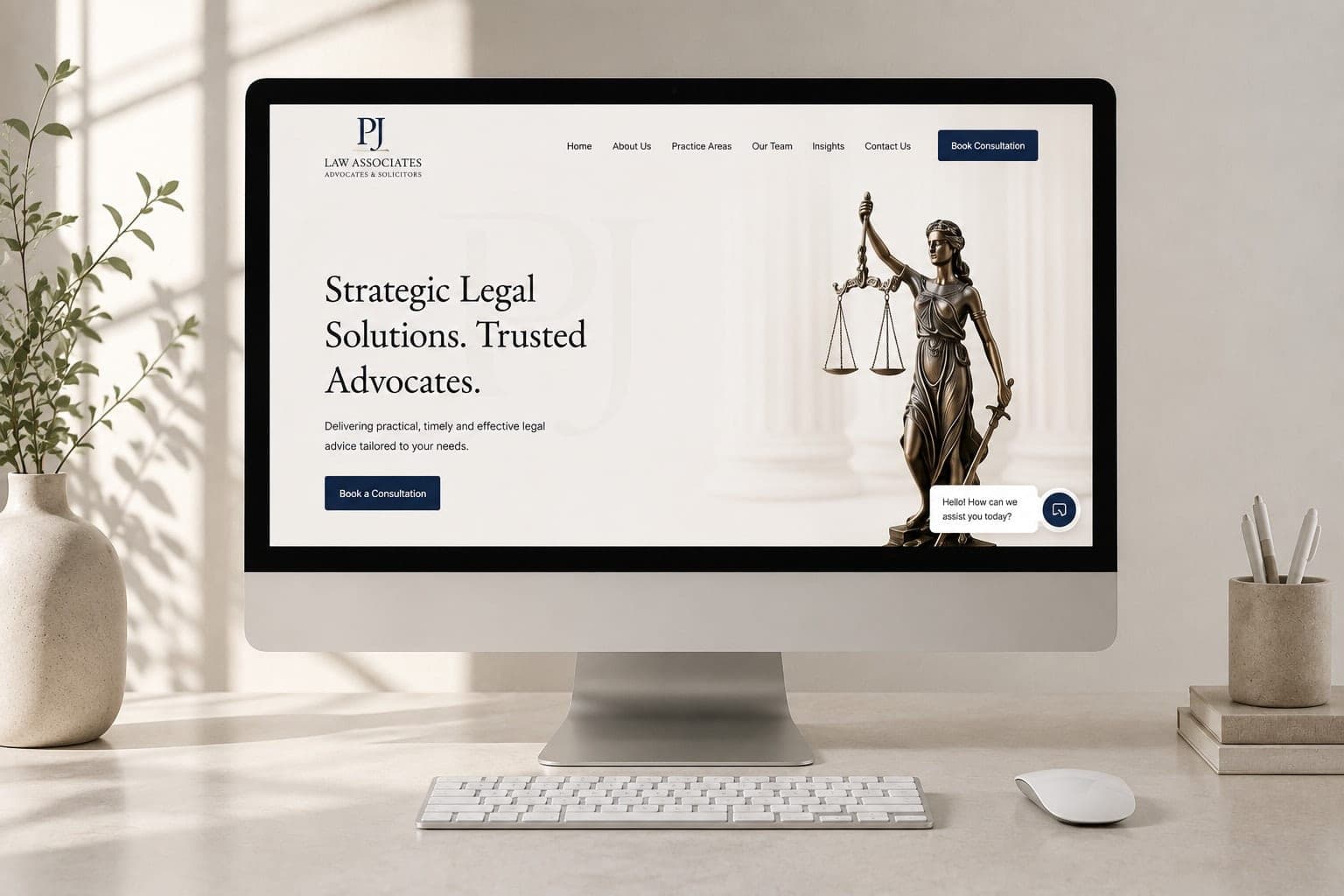
Someone searching for a lawyer is usually stressed and short on time. They'll open four firm websites, spend under a minute on each, and call the one that felt most credible. Your website isn't a brochure — it's the first interview, and it happens whether you're ready or not.
Credibility is established in seconds
Before a word is read, the site is being judged. A dated, cluttered or template-looking site quietly says something about the practice behind it. Clean design, real photography and confident copy do more for trust than any list of achievements.
- Practice areas stated plainly — what you actually handle, in words clients use
- Real people — genuine team photos and bios, not stock handshakes
- Signals of experience — years in practice, notable work, bar memberships
- Location and hours — a firm that clearly exists in the real world
- A visible, easy way to reach you — on every page, not buried under “Contact”
Write practice areas for clients, not lawyers
Visitors don't know legal taxonomy — and shouldn't need to. “Property disputes” gets found and understood; “civil litigation practice group” doesn't. Describe each area in terms of the client's situation: what it covers, who it's for, and what the process roughly looks like. The firms that explain plainly are the ones that get the call.
Make the next step effortless
- Phone number in the header — some clients will always prefer to call
- A short enquiry form — name, contact, the issue in their own words. Eight-field intake forms lose people
- Office location with a map — meeting a lawyer is still a physical decision
- Honest expectations — what happens after they enquire, and how fast they'll hear back
Content that answers real questions
Articles that answer questions people actually ask — “what happens if a tenant stops paying rent”, “how does property registration work” — do double duty: they rank on Google and they prove expertise better than any claims. Every genuinely helpful answer is another door into an enquiry.
The takeaway
A law firm website sells trust, not services. Clear practice areas, real people, plain language and a contact path with zero friction — that's the whole job. The linked case study shows how we applied this for a boutique corporate firm.
See it in practice
PJ Law Offices — a law firm website we designed and built
Found this useful?
We publish practical notes like this occasionally — get the next one by email. No spam, unsubscribe anytime.
Next article
WordPress or Custom Code? An Honest Way to Choose